Michigan's Elk Herd
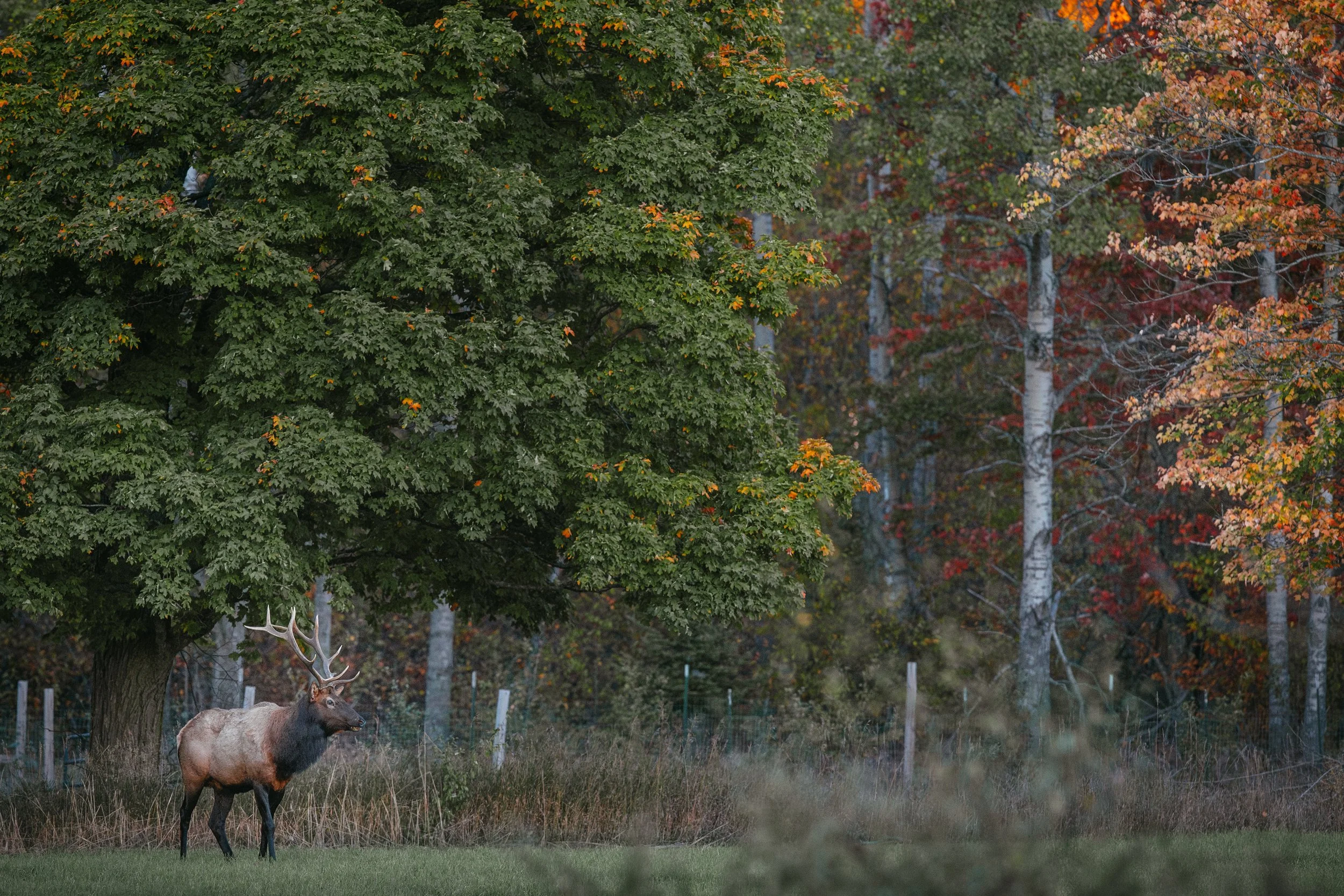
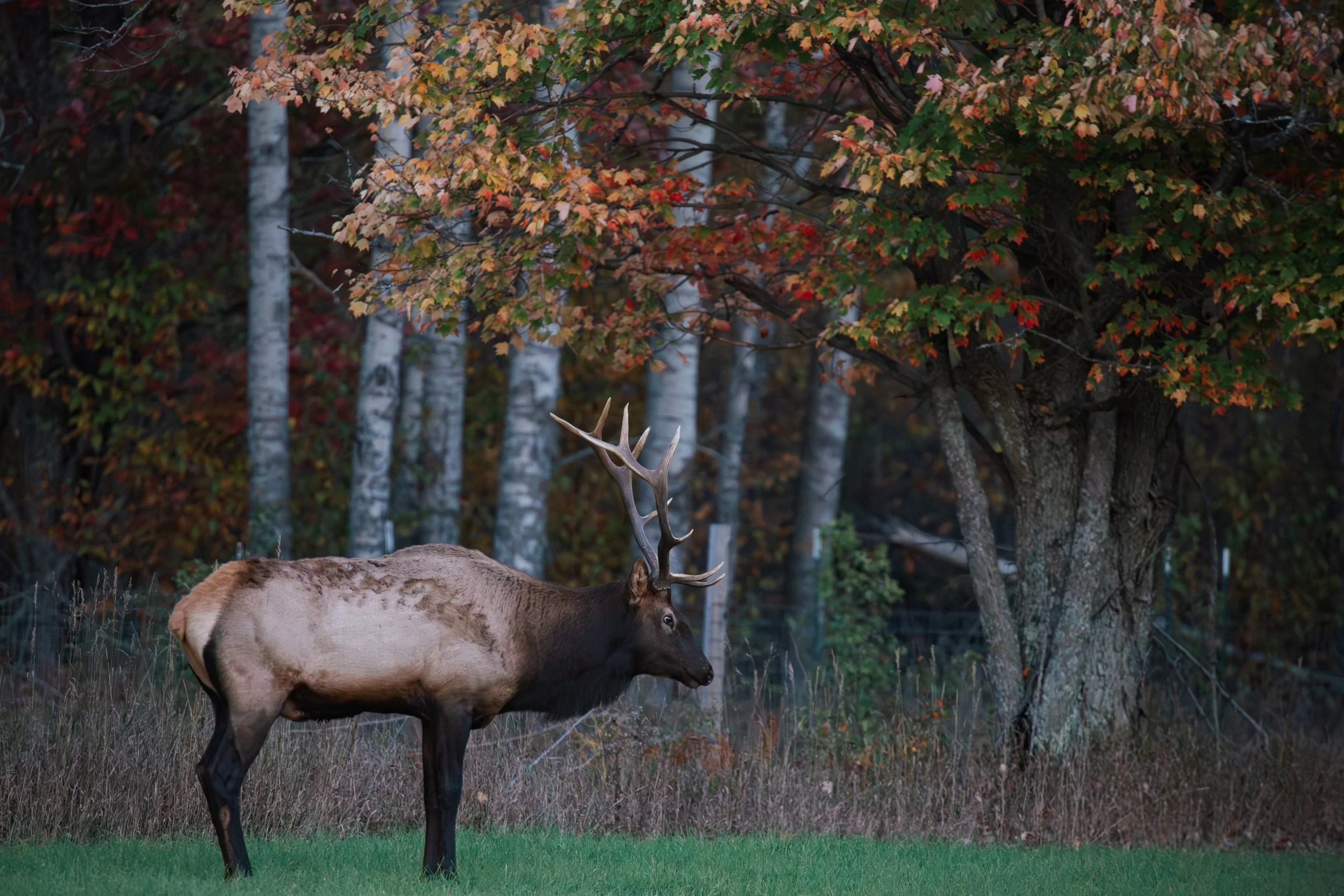
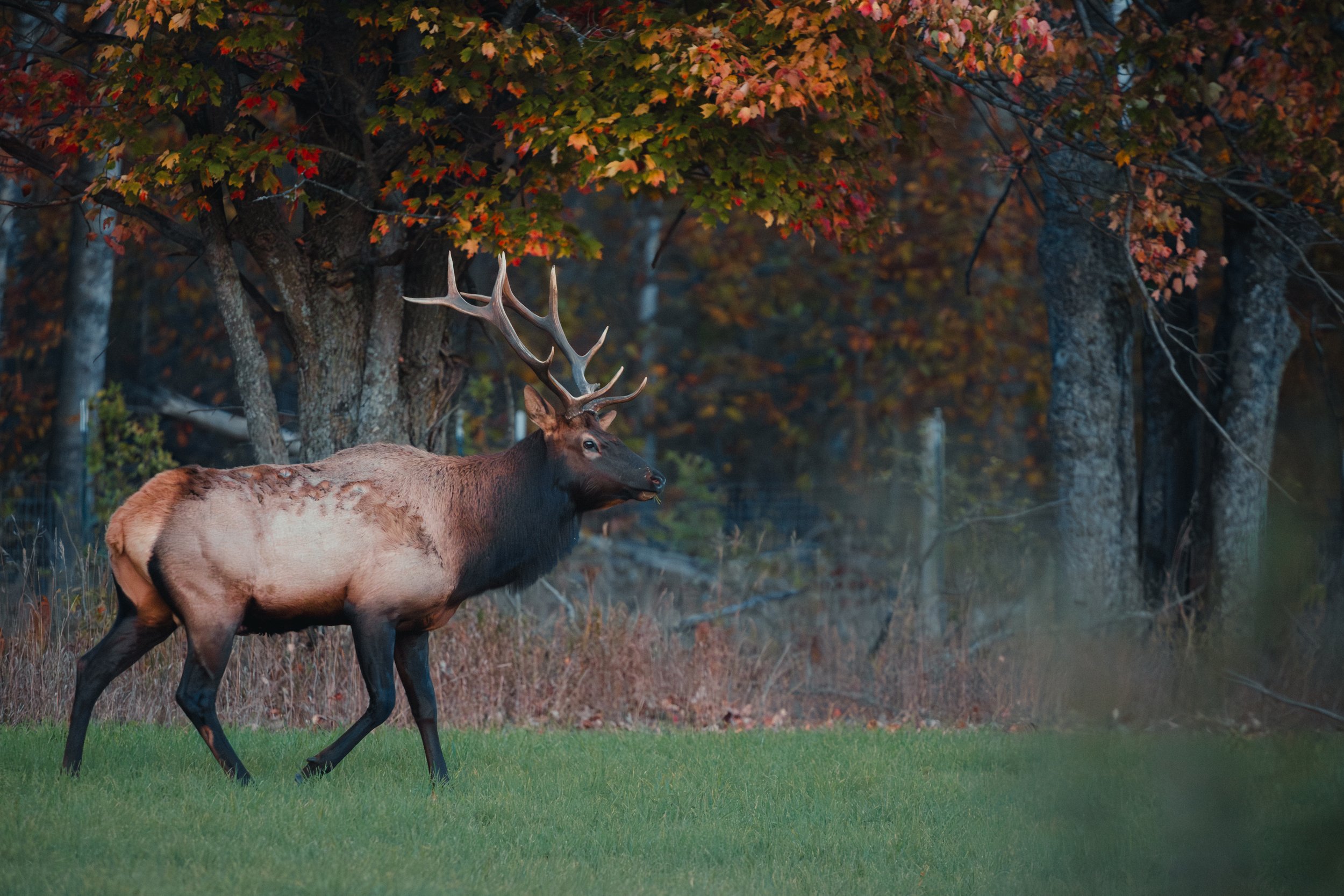
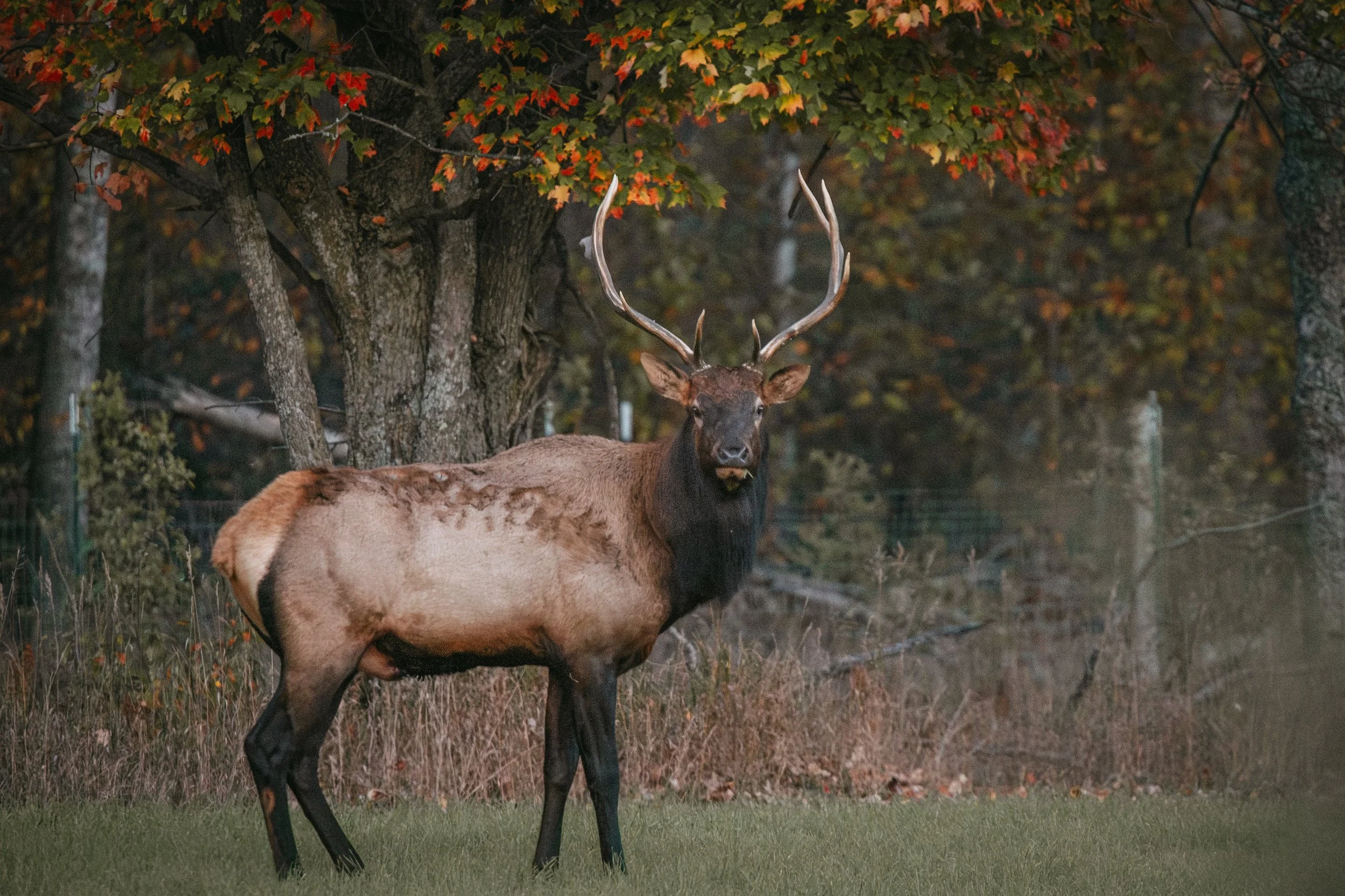
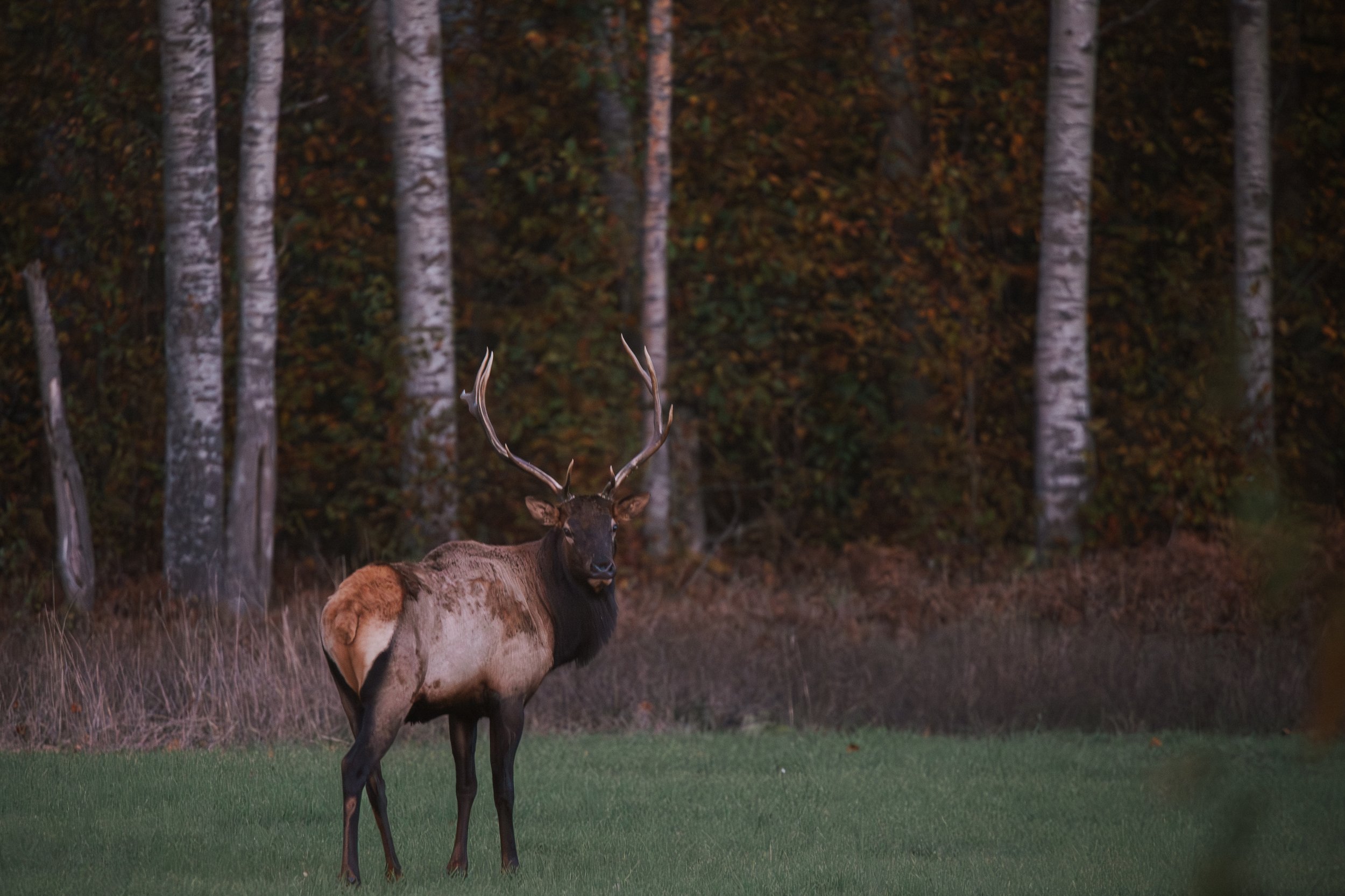
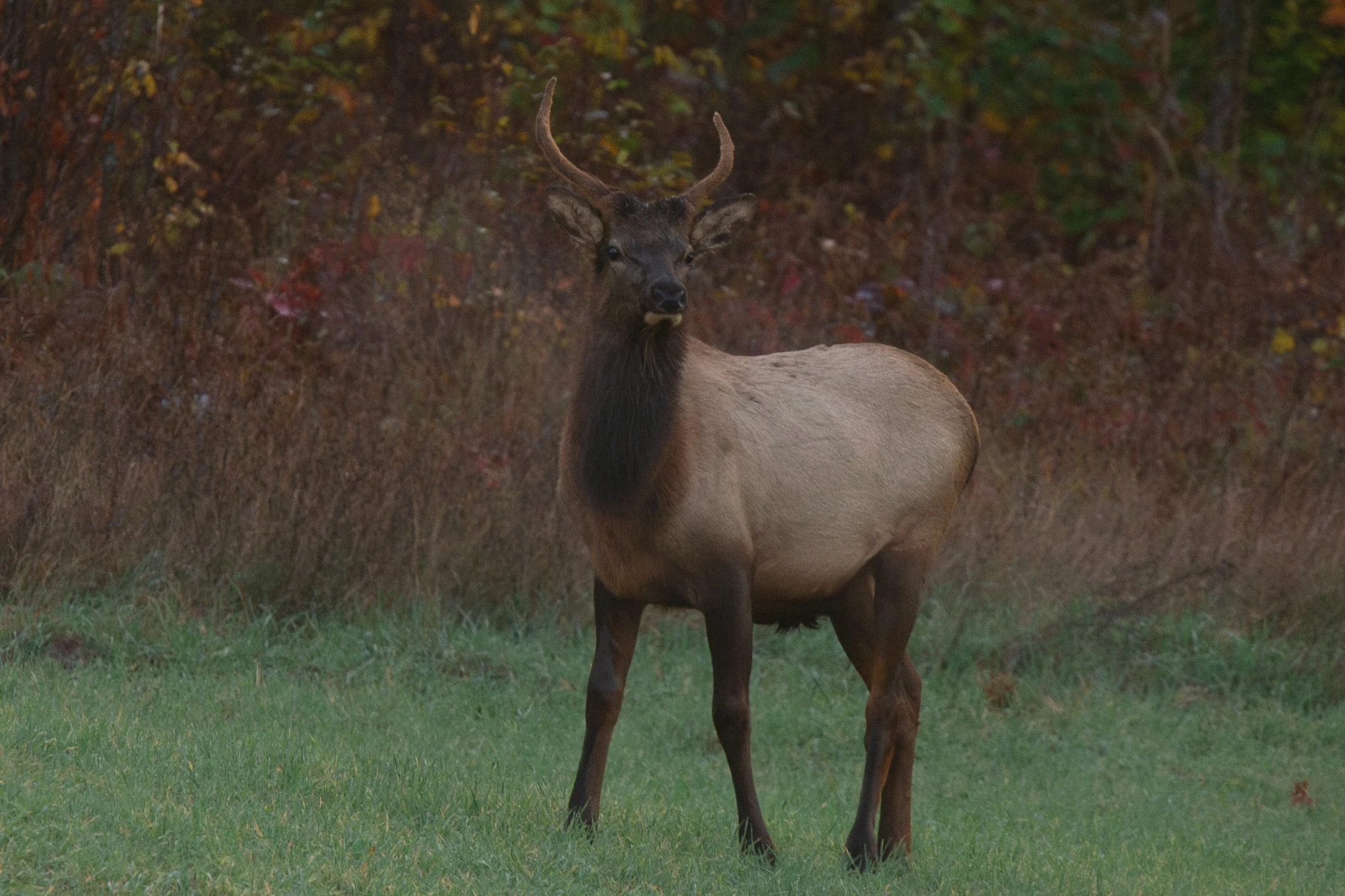
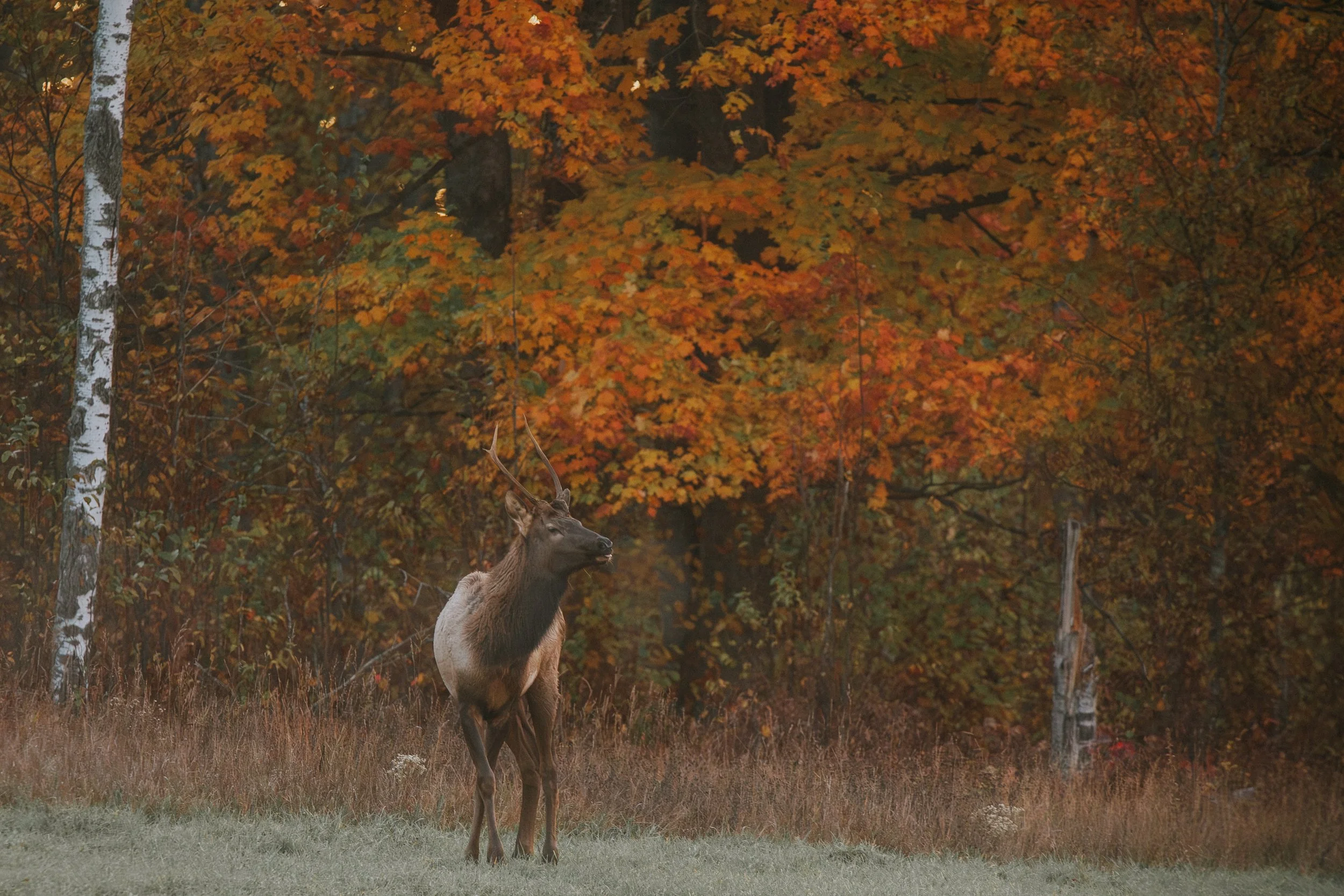
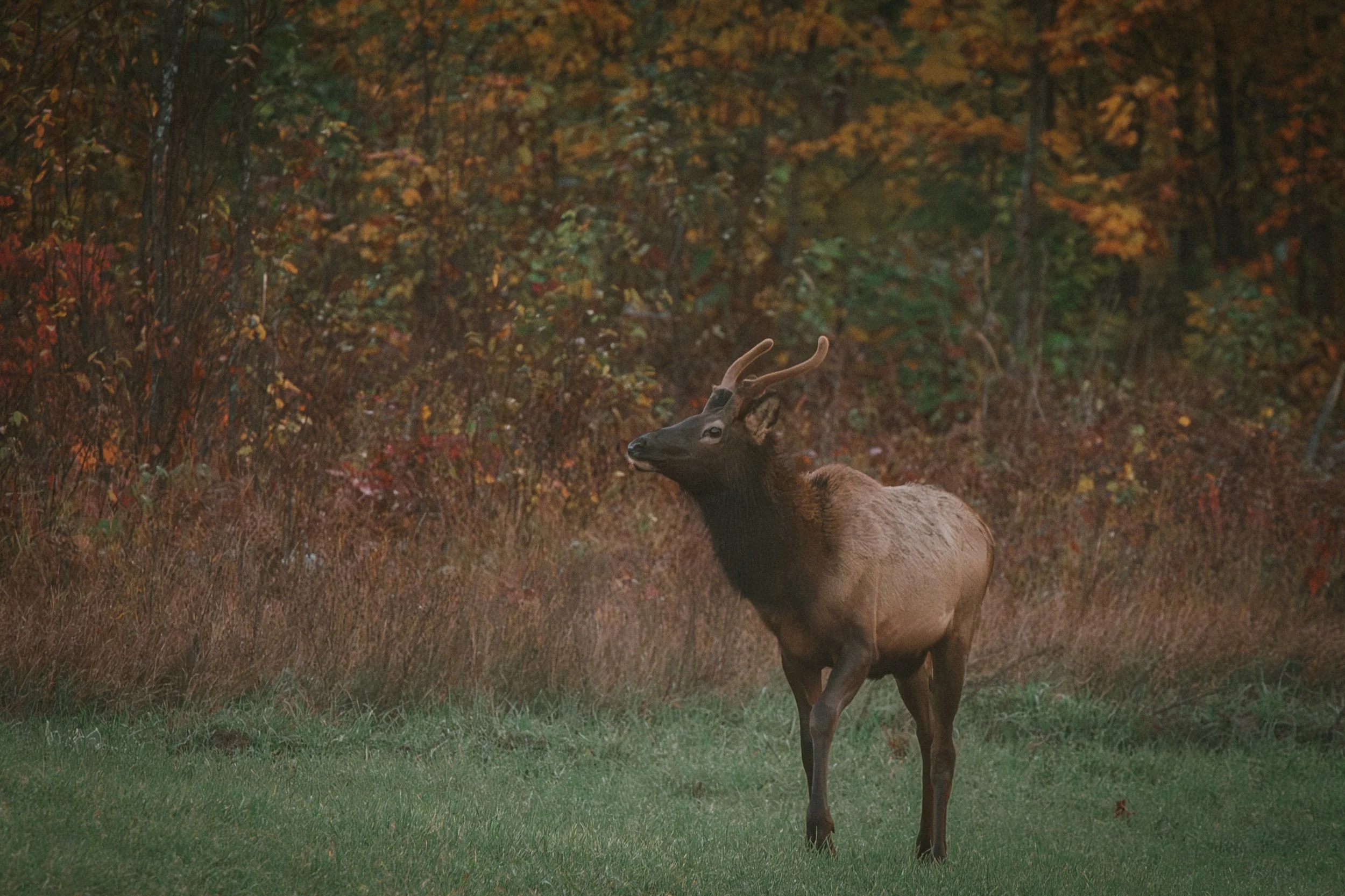
A bull elk is seen grazing at the #10 DNR elk viewing area, October 9, 2025.
The Eastern Elk (Cervus canadensis canadensis), which was native to Michigan and Eastern North America and date back over 5000 years, was declared extinct in the 1870’s. Widespread deforestation, hunted beyond sustainable limits, and their habitat overrun with livestock as European settlers brought cattle, sheep, and pigs into former elk ranges.
In the early 1900's the State of Michigan made several attempts to reestablish elk using Rocky Mountain elk - a subspecies distinct from Eastern elk. They all failed. But in 1918, another seven elk were brought by rail from Jackson Hole, Wyoming, to Gaylord, Michigan. There they travelled by wagon to their release site near Wolverine, inside what is now the Pigeon River Country State Forest. The present herd, numbered at close to 1200, descended from this release and is considered one of the most successful wildlife reintroduction programs in North America.
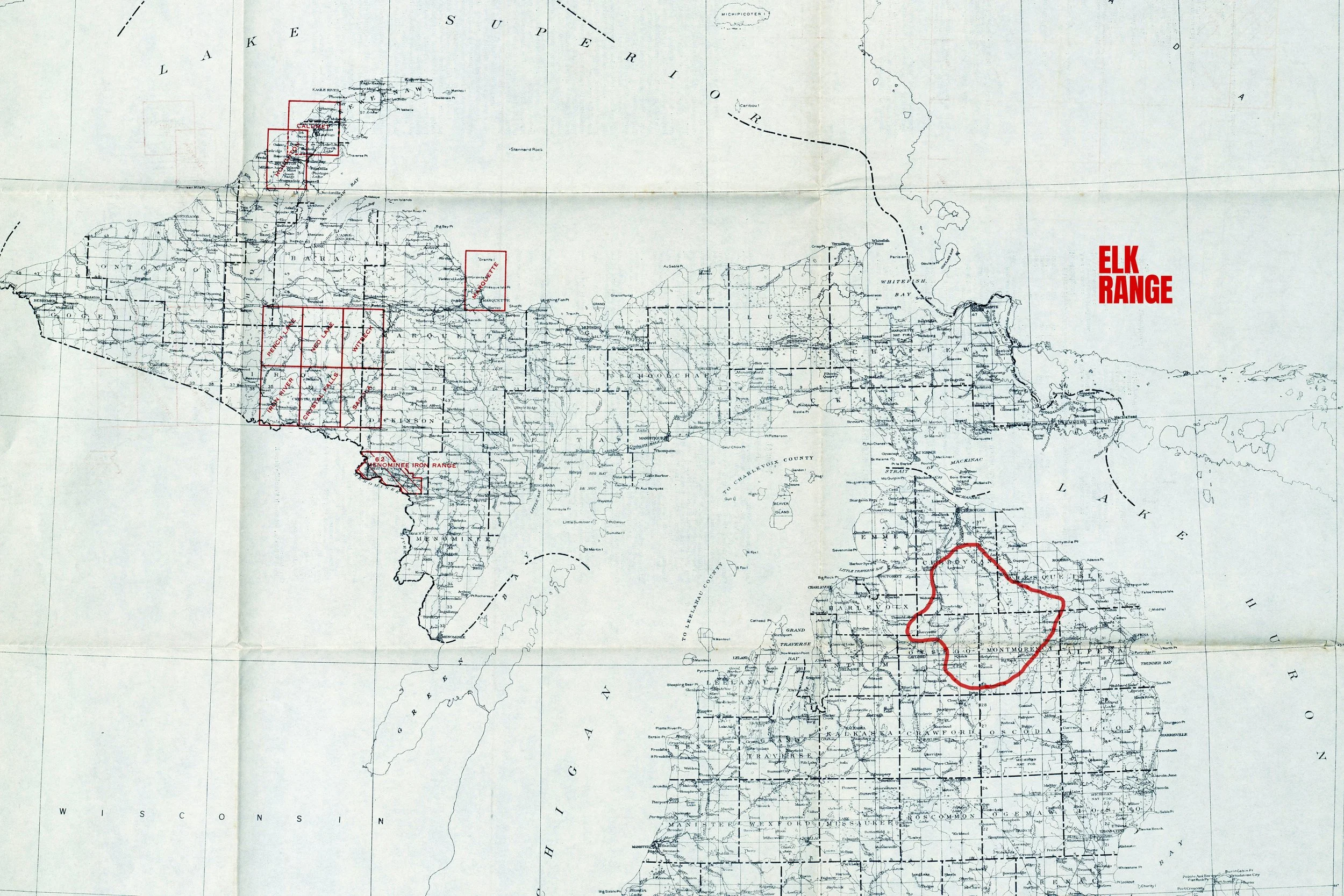
By the 1960’s, the herd had grown steadily to about 1,500 - a point where limited hunting became permissible in 1964 and 1965. However, due to reduced habitat quality and severe poaching, the herd fell to only 200 by 1975. This was a time when public interest in the Pigeon River Country was peaked due to an extensive conservation battle with oil companies and their desire for oil exploration in the area. Reduced poaching losses, habitat improvement and successful management of hydrocarbon development resulted in an increase in elk numbers to 850 by the mid-80’s. But to bring the herd in better balance with it’s natural food supplies and the needs of landowners who suffered increased agricultural damage, elk hunting resumed in 1984. Limited hunting resumes to this day. In 2025, 260 licences were awarded out of nearly 60,000 applications.
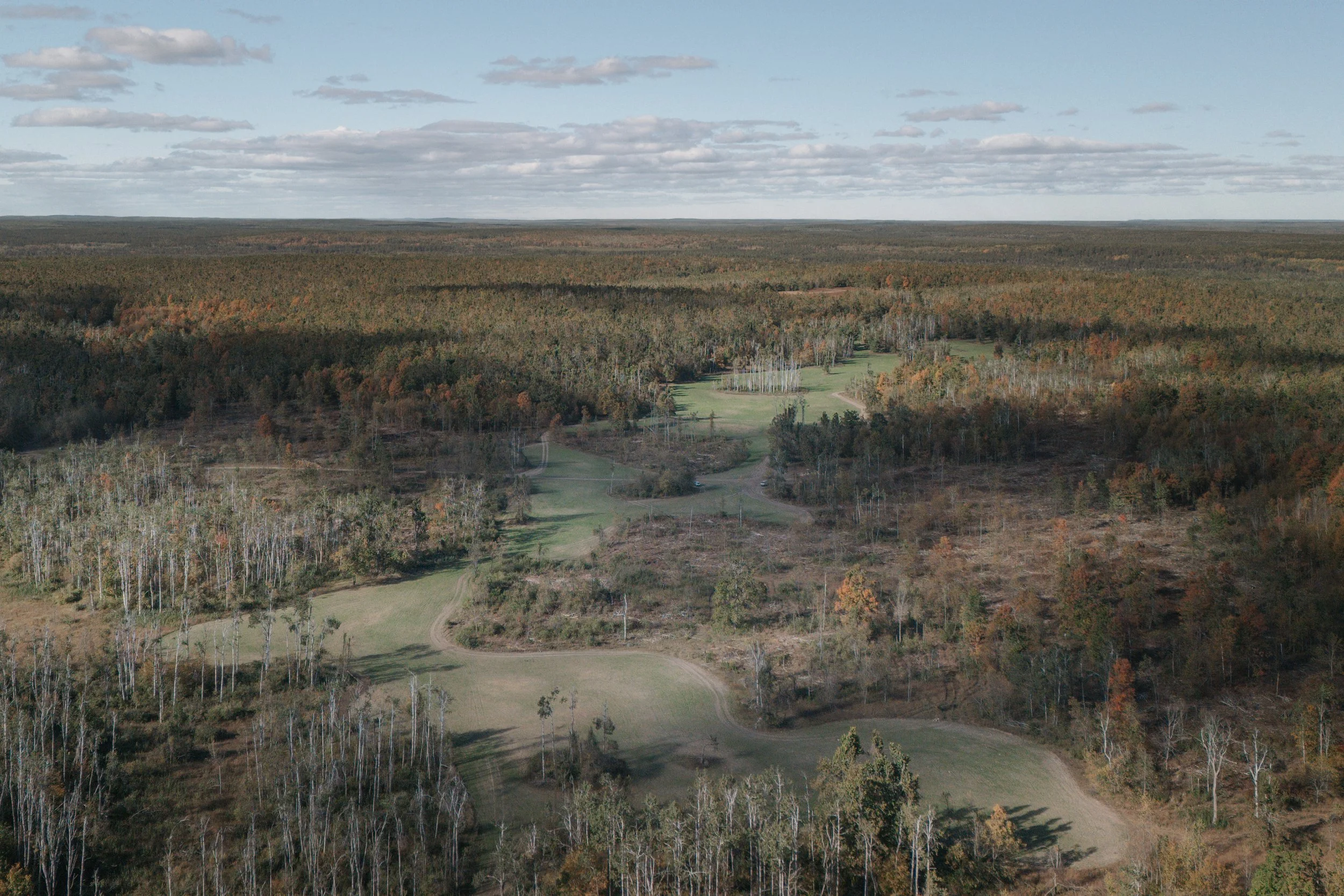
Hunting is one method the Department of Natural Resources (DNR) manages the elk herd. Another is with managed openings. Elk prefer large open areas and young forests, preferably aspen, to feed on. In order to prevent elk from roaming onto private land and competing with livestock for forage, the DNR creates large openings on public land throughout the elk range. What might appear as manicured golf courses are actually managed wildlife openings, often fertilized and planted with rye and clover and enhanced by periodic mowing and replanting. Many of these are accessible by vehicle and are promoted as elk viewing areas. There are thirteen of them and you can find directions to them on Google Maps.
One of those viewing areas is located among the forested hills off Tin Shanty Road. It’s hike-in only and it’s where I planned to camp for the night. However, after arriving in the Pigeon mid-afternoon after a four-hour drive from Windsor I failed to find a suitable location. I was hoping for a two-track that I might drive down to get me close to the viewing area, but I couldn’t find one. So I settled for a spot on Saw Dust Pile Trail, 2km east of the viewing area. The sun was shining, steak on the menu, and the Tigers were about to beat Cleveland in game 3 of the wild card series. Shortly after sunset the coyotes started yipping. A full moon rose to the east and I’d soon find myself snug in my tent with temps plummeting to -4°C (24°F). In the morning, I set out before sunrise in search of some elk.
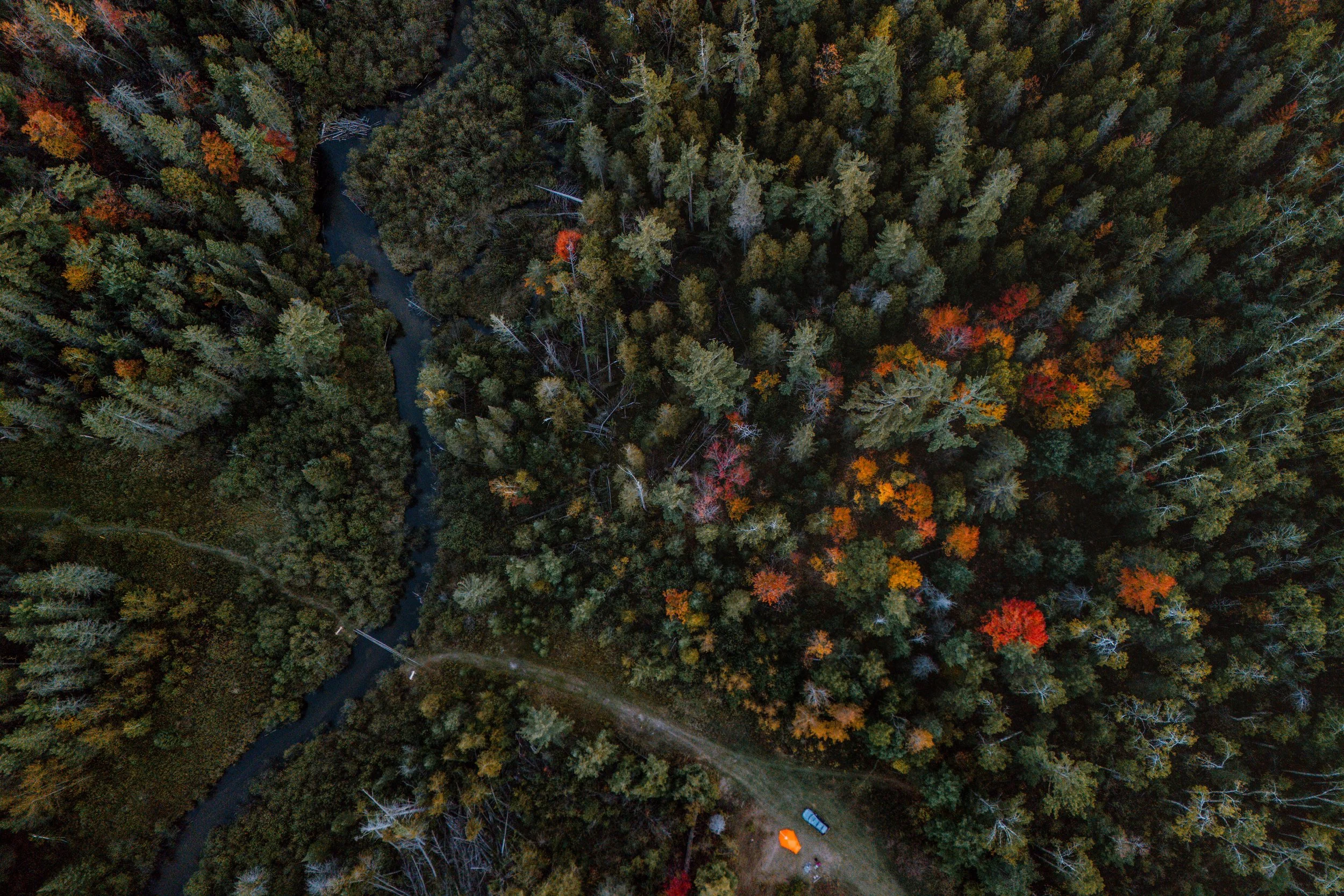
My dispersed camping spot next to the Black River off Saw Dust Pile Trail.
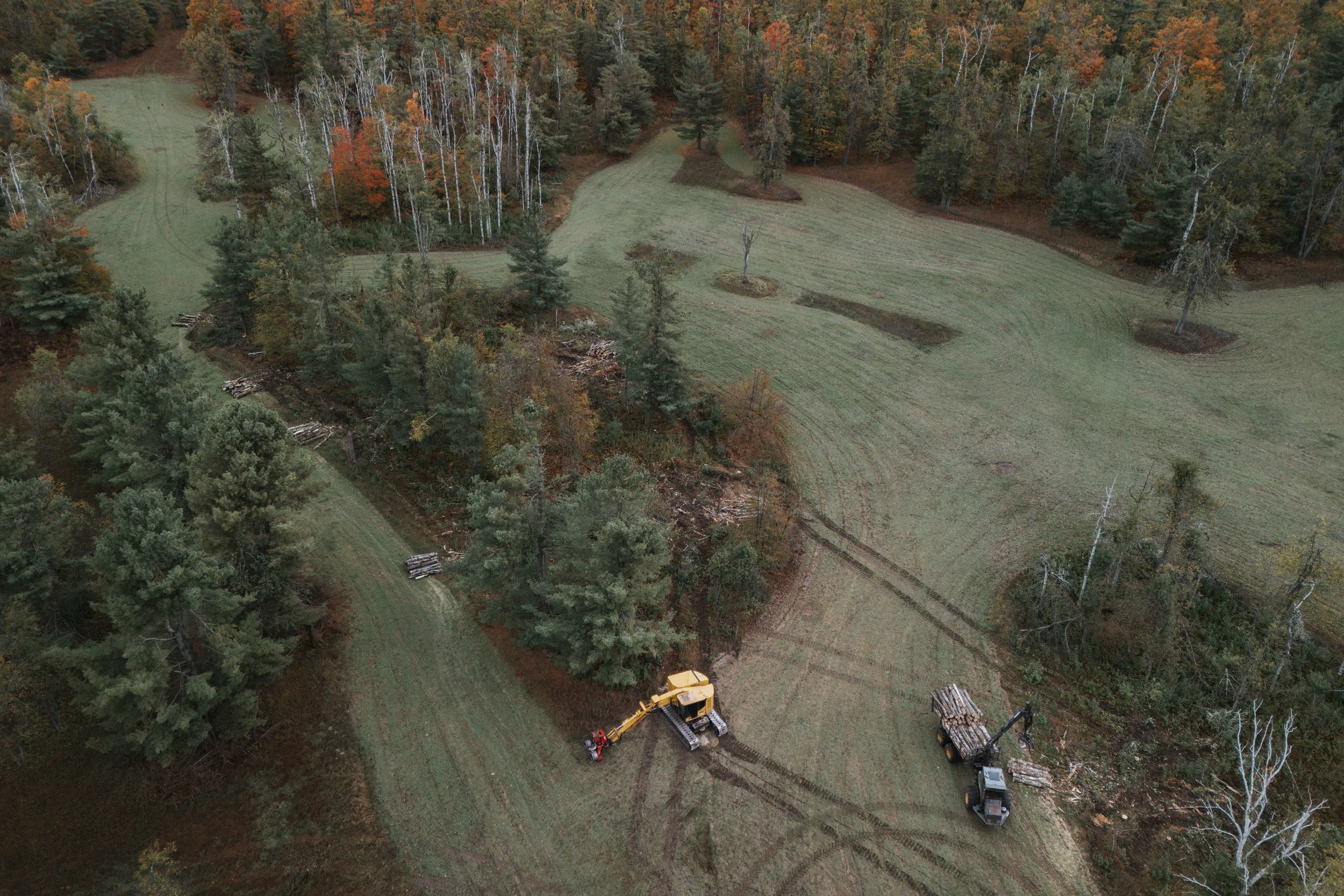
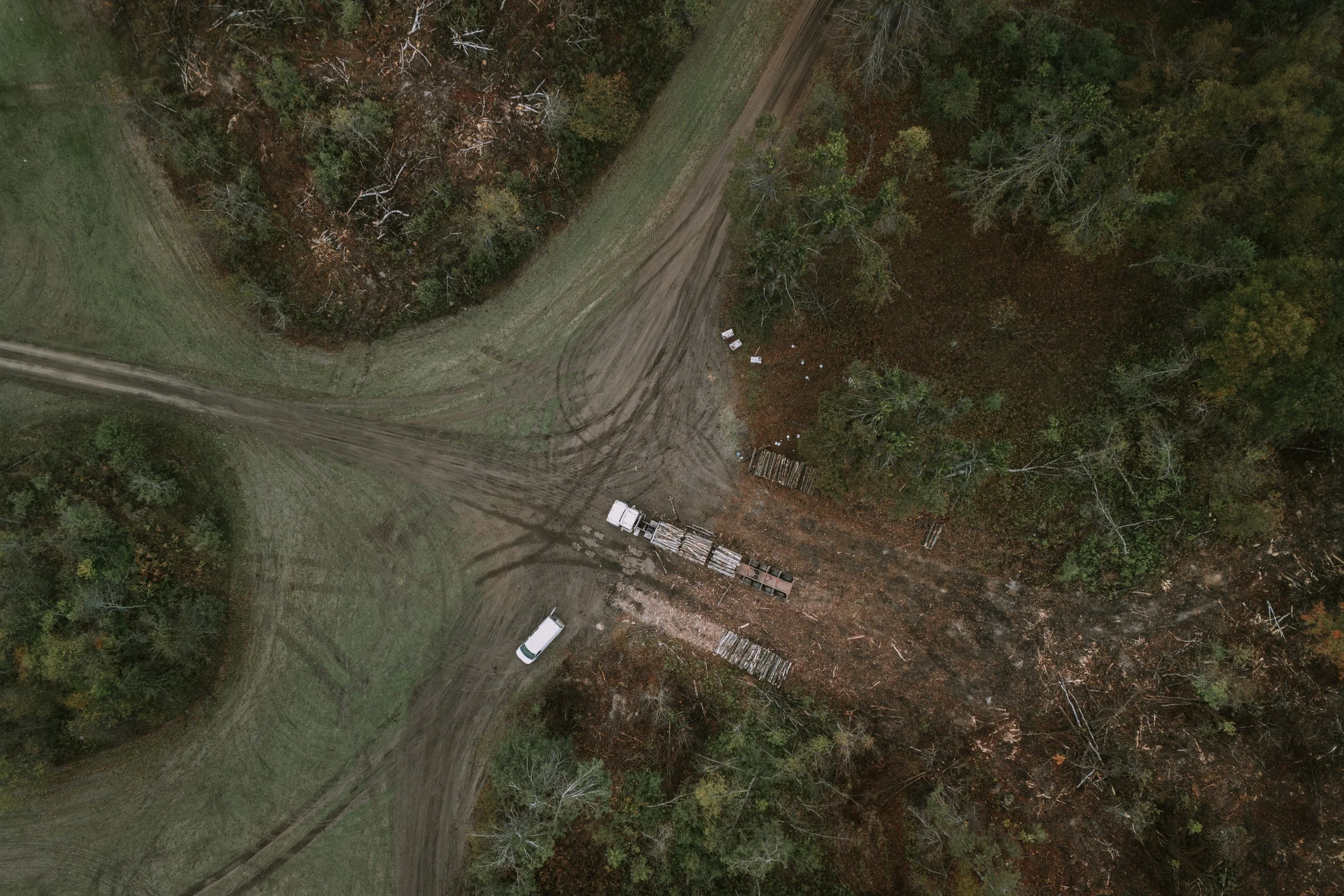
Sitting in my car at the edge of an oil well that had an overgrown two-track leading towards the viewing area, I waited for some version of twilight as temperatures crept north of freezing. Following the GPS on my phone I made my way in the dark looking for the path of least resistance towards the wildlife opening. In the distance I heard machinery. After walking a short distance in the wrong direction I bushwhacked my way to a clearing. Elk tracks were everywhere and every few minutes I heard knocking in the adjacent woods. The machinery grew louder. It was definitely a logging operation and the chances of seeing any grazing elk was minimal. I stuck around for a time and then cut my losses. I’d have to check out other clearings, but my window for the morning had likely passed. This was my first day of six days at the cottage and while the colours were beginning to change, elk would be my focus.
The best time to view wild elk is in the breeding season, or rut, of September and October, and at dawn and dusk when they gather in open fields to feed. I started to explore different viewing areas beginning a few hours before sunset when I found myself at the #10 viewing area off County Rd 622. This is only a twelve minute drive from the cottage and it overlooks a large pasture of both planted grass and cut forest. I arrived an hour before sunset and sat quietly while Yellow-rumped warblers chirped in the bushes and a slight breeze blew in from the west. After staring at an empty field for an hour I began to believe I had struck out once more. I put my car in drive and began a slow crawl towards the exit when all of a sudden, as if on cue with the sun going down, a large bull emerged a mere 75 meters away. I slammed on the brakes, briefly leaving the car in drive as I exited to grab my camera in the back. I snapped several dozen images before it trotted back into the woods out of sight. In the 12 years exploring the Pigeon, this was my first decent sighting of an elk. I was hooked.
I went back again each morning, nearly hitting deer as I raced down the highway in the dark hour before sunrise, and every evening, pausing only to spend time with family on Thanksgiving, and each time I was out of luck. I had seen two in the fog one morning but it was still too dark to capture a photo. Was my first night a fluke?
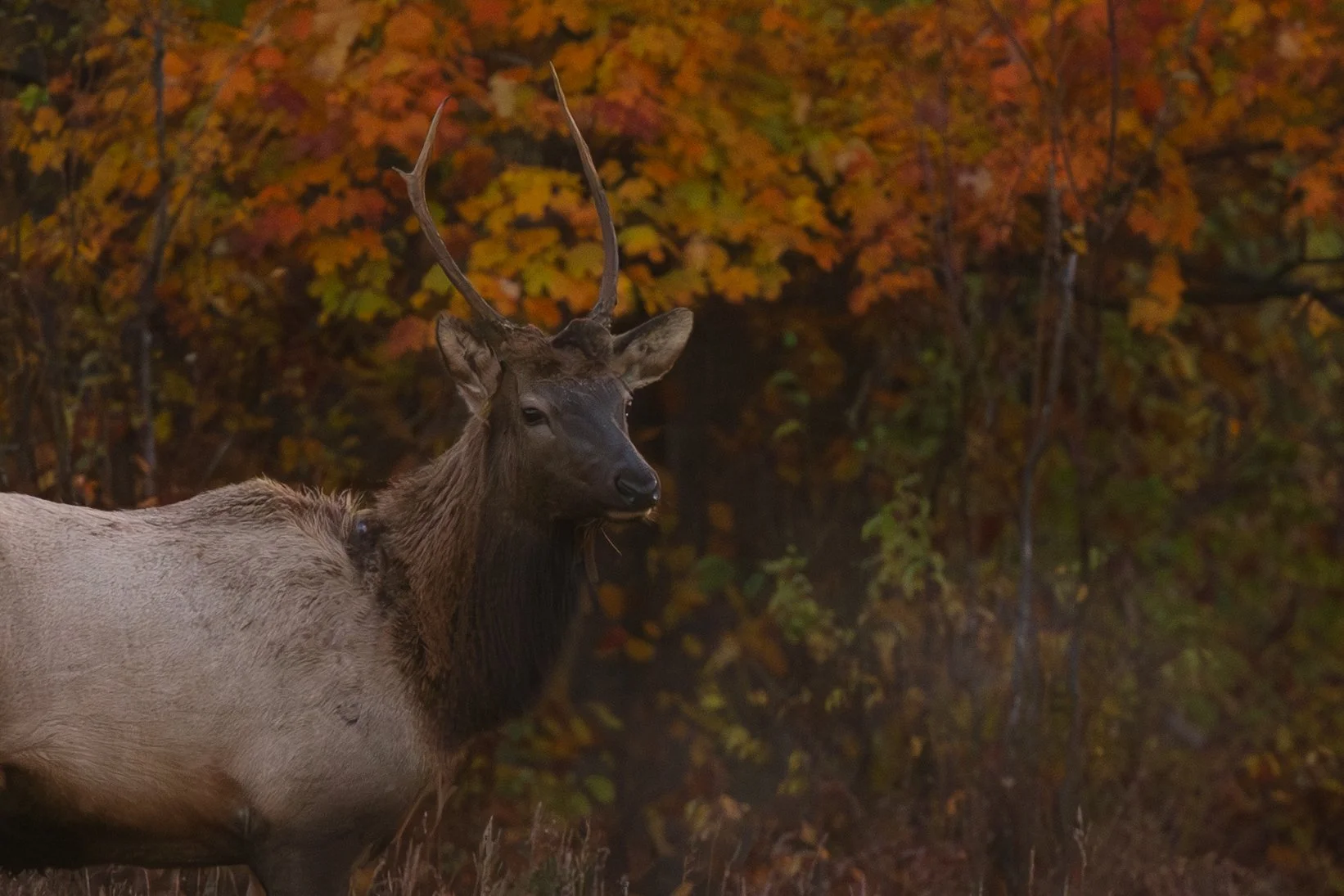
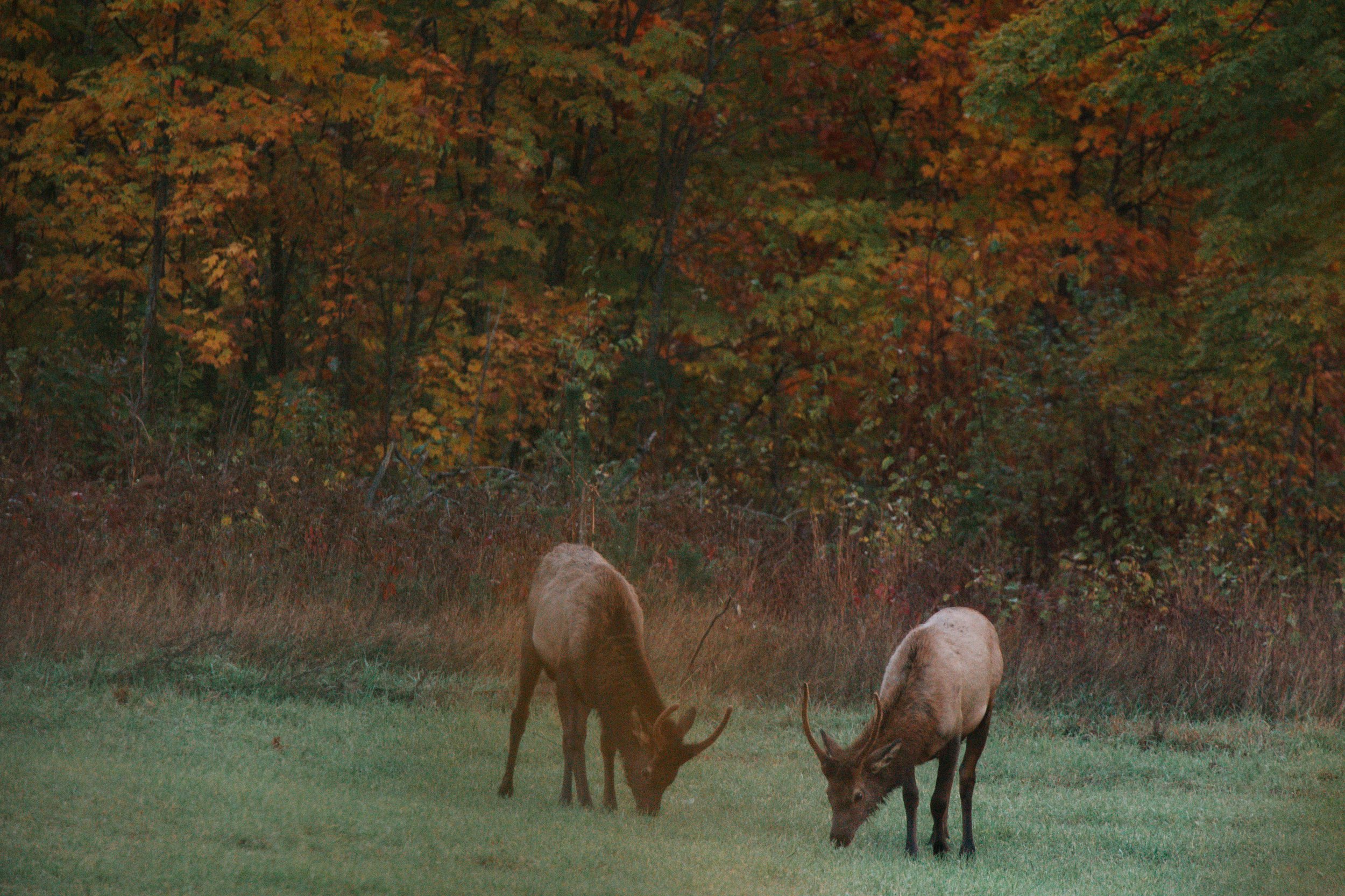
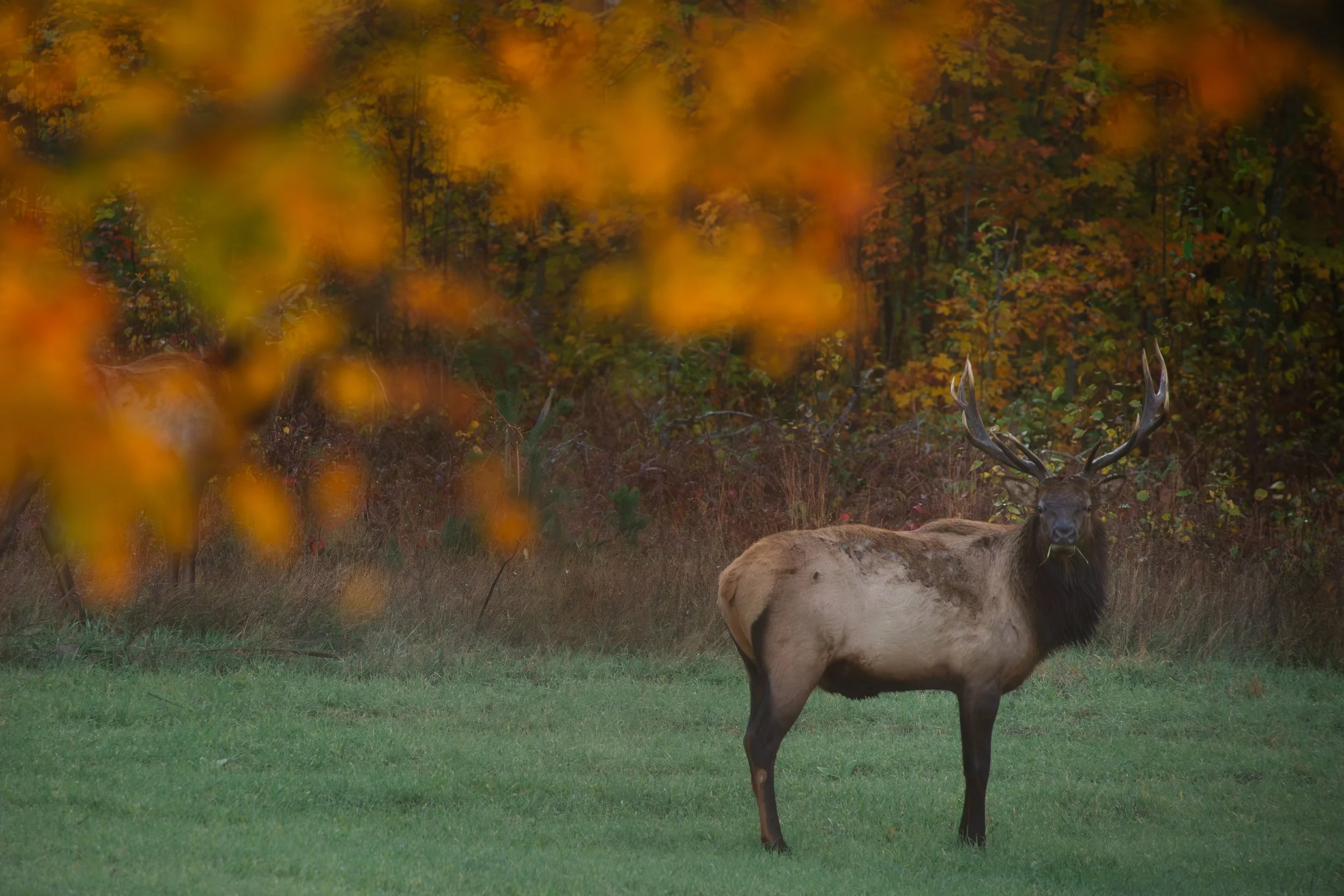
I was set to leave on Tuesday afternoon and so I set out in the morning for one last try. Again, after nearly an hour sipping coffee and listening to the birds and feeling like my time was up, four bull elk emerged on the far end of the field. I crept closer as the herd bull with a large 11-point rack and impressive neck mane waded out of the woods. Standing there alone at sunrise, with members of a herd that started as 7 over a hundred years ago, I felt a sense of connection to this place. I thought about my grandparents who settled here in 1989 when they built our family cottage on Sparr Road. There’s still so much to explore in these woods.
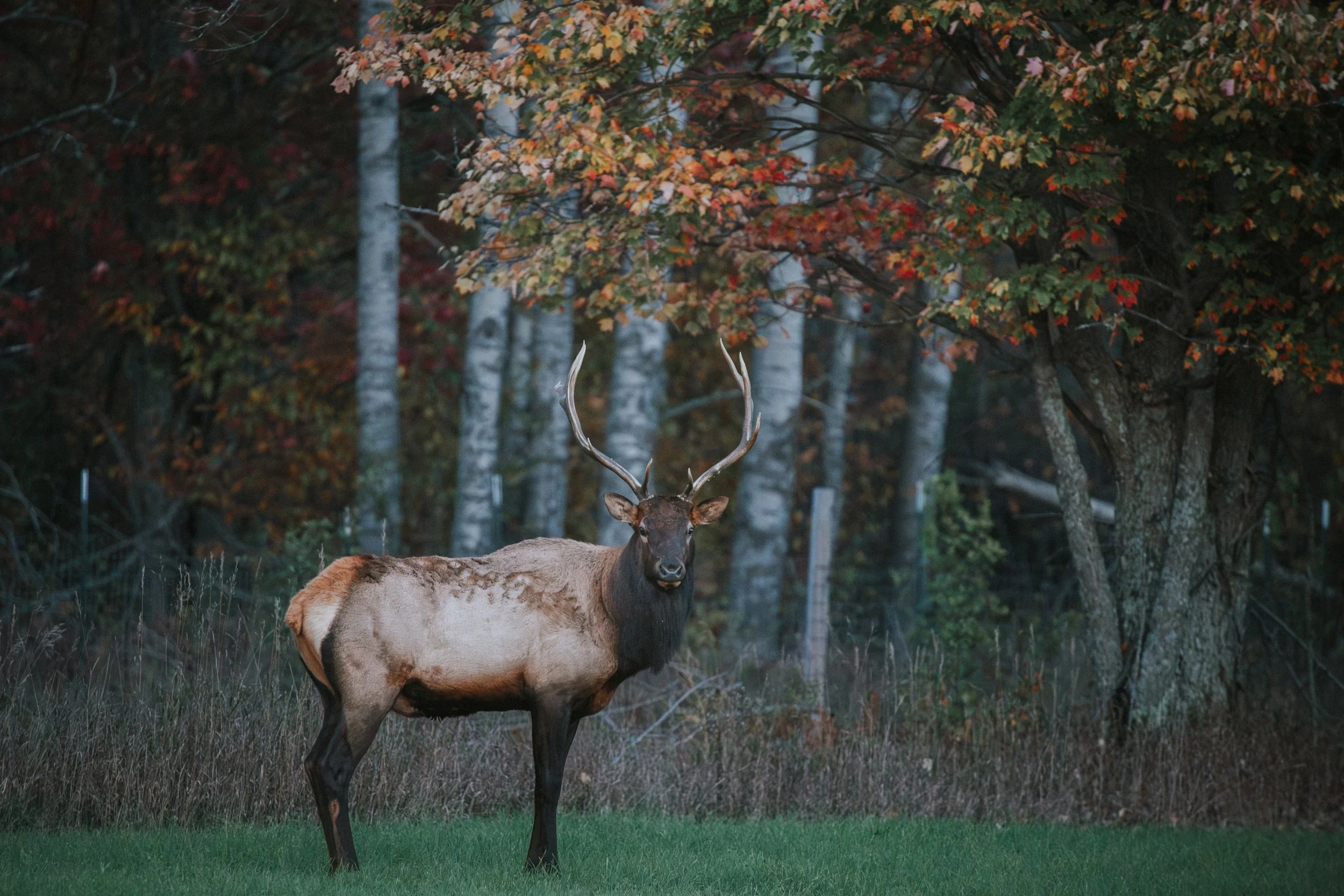
A bull elk grazes on grass at the #10 viewing area shortly after sunset on Thursday, October 9.