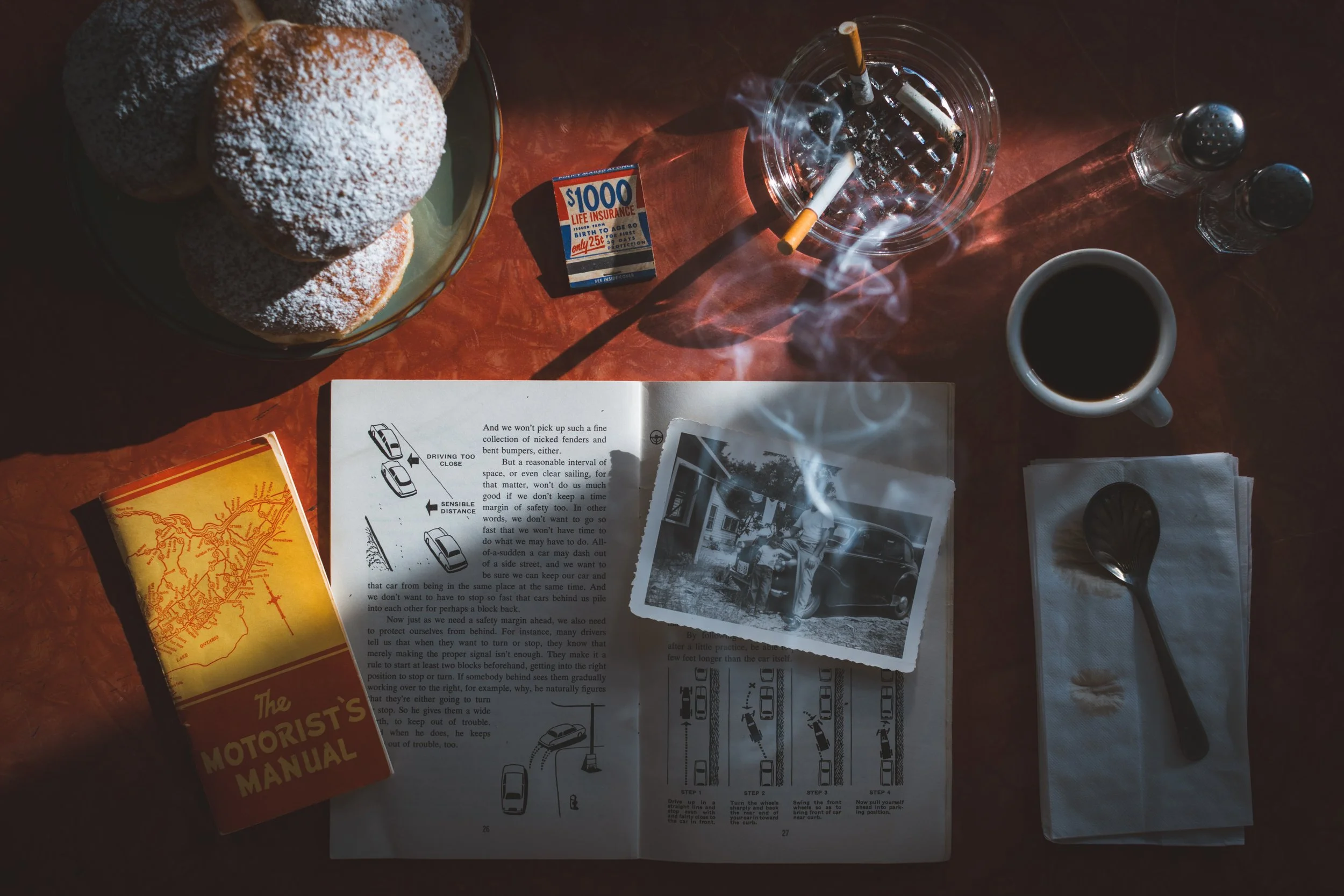
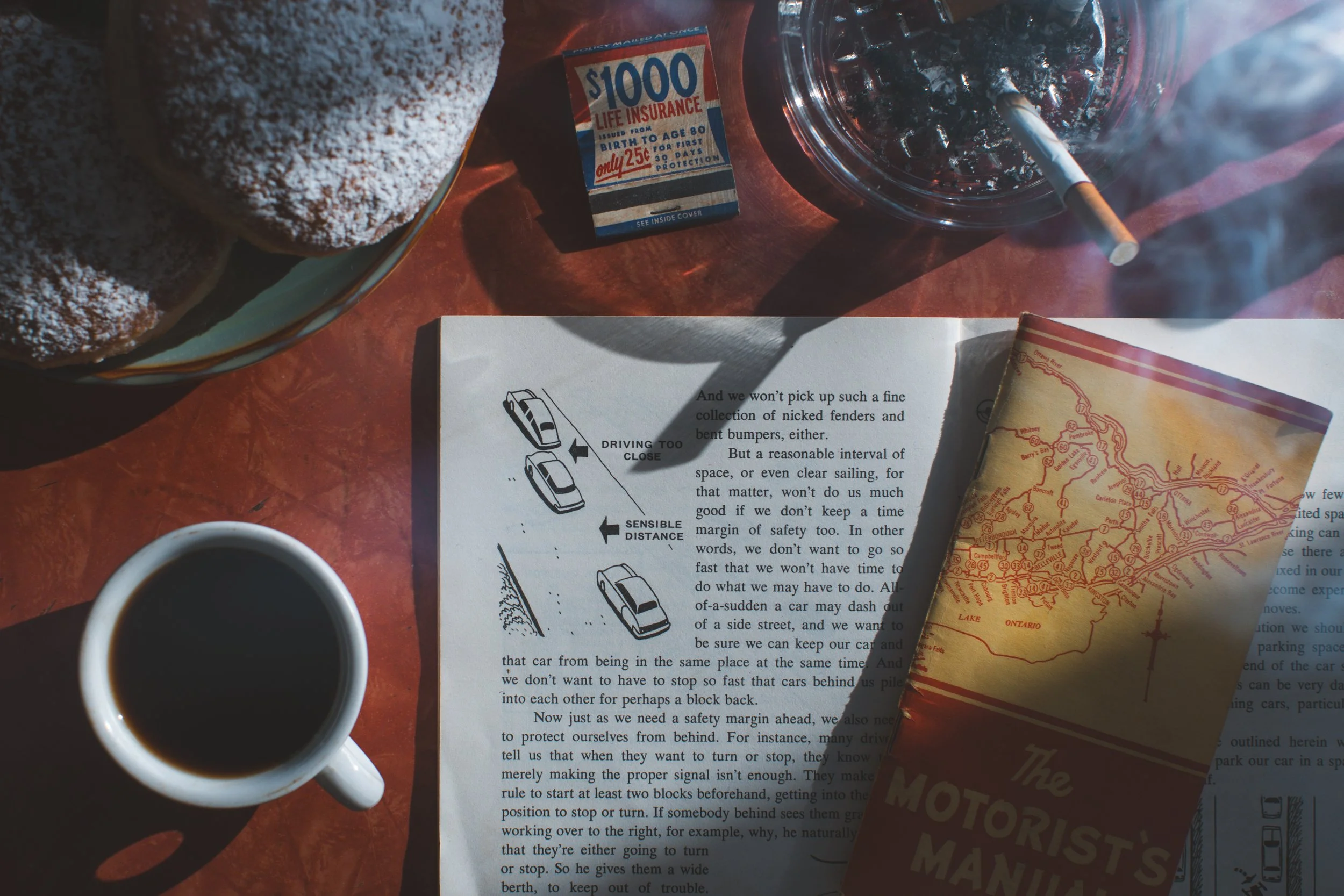
The Motorist’s Manual, released by the Motor Vehicles Branch of the Department of Highways for Ontario in 1957, and We Drivers, an influential safe-driving guide published by General Motors of Canada in 1949. In the preface to the Motorist’s Manual, the goal is laid clear - ‘reduce the tremendous and unnecessary waste of life, health, and property now resulting from motor vehicle accidents’. In the 1950’s, vehicle fatalities began to explode. According to a 1950 report published by the Government of Canada, “every day of the year 6 Canadians went to an untimely grave and probably over 100 to hospital due to motor vehicle accidents…[and] speed is charged as the leading cause of highway accidents.” The culprit is no surprise as it remains the leading cause in 2026.
Yet these booklets urging care and caution when driving seemed of no use. Fatalities climbed each decade until peaking in 1973 - the all-time deadliest year in Canadian history - with 6,706 deaths. It wasn’t until we saw mandatory seat belt laws (1976), the anti-impaired driving movement, the evolution of vehicle safety engineering, and modernized highway and infrastructure design did we see vehicle fatalities begin to plummet substantially.
However, numbers in recent years are again showing increases in traffic fatalities. The 2,050 deaths in 2024 (the last calendar year for which national traffic fatalities were officially confirmed by Transport Canada) marked a 12-year high. Speeding, drunk driving, and the modern crisis of distracted driving are all leading causes. Lawless and aggressive driving (tailgating or unsafe, erratic lane changes) is also on the rise. But you don’t need me to tell you. It becomes obvious the moment you leave the house these days. Case in point, just recently, on October 28th and 29th, 6 people died in 3 separate motor vehicle incidents in Essex County.
But there’s hope.
Vision Zero, a systems approach that focuses on infrastructure design to absorb human error instead of appealing to human behaviour (The Motorist’s Manual), was first launched in Sweden in 1997. And while the results have not been zero deaths, the Nordic country has been able to reduce deaths by half and leads the EU in road safety. The City of Windsor adopted the policy in 2020 with an action plan approved in 2024. That kicks off the 15-year roadmap to completely eliminate traffic fatalities. If we can mirror Sweden’s success, that’s a start.
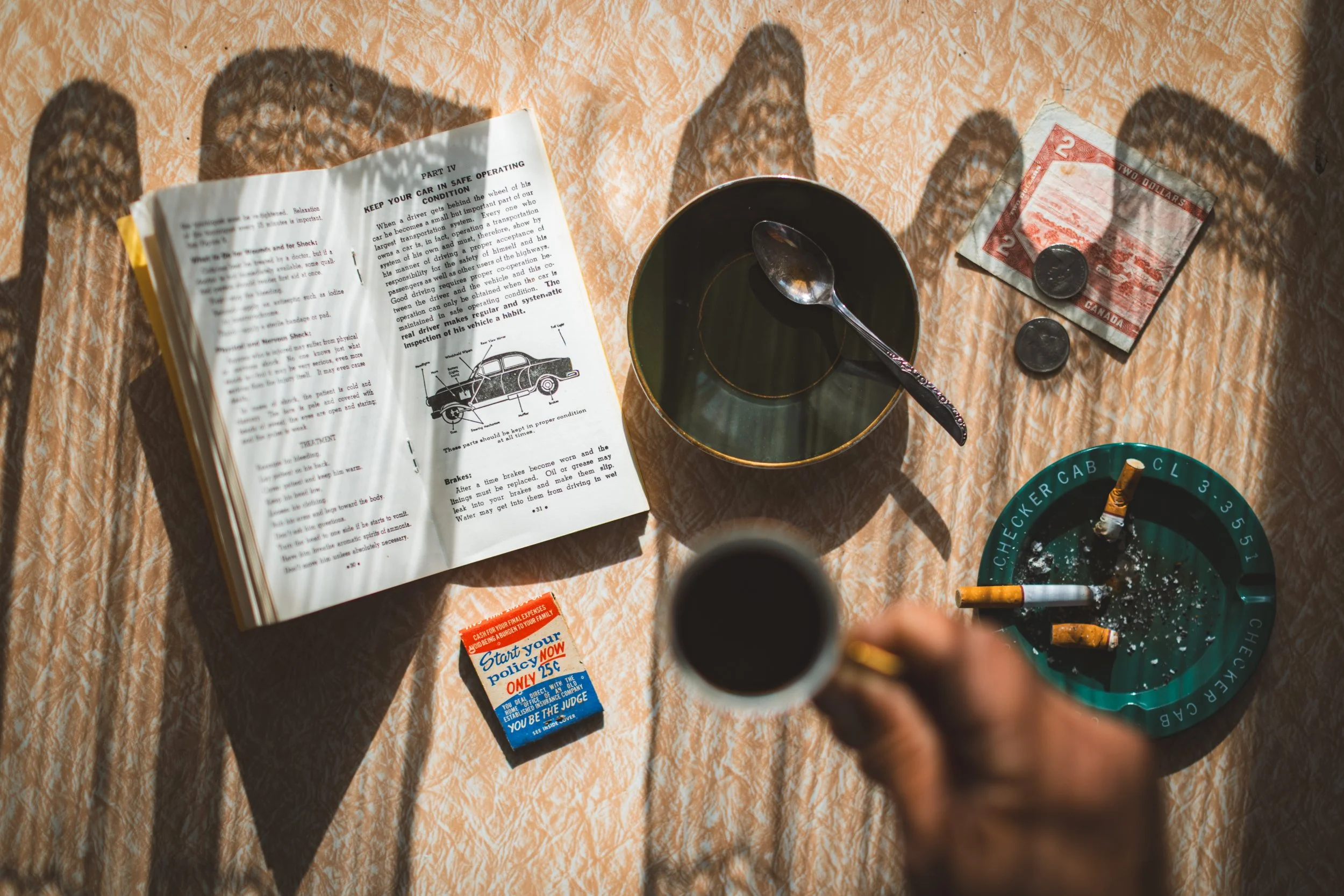
Prop items:
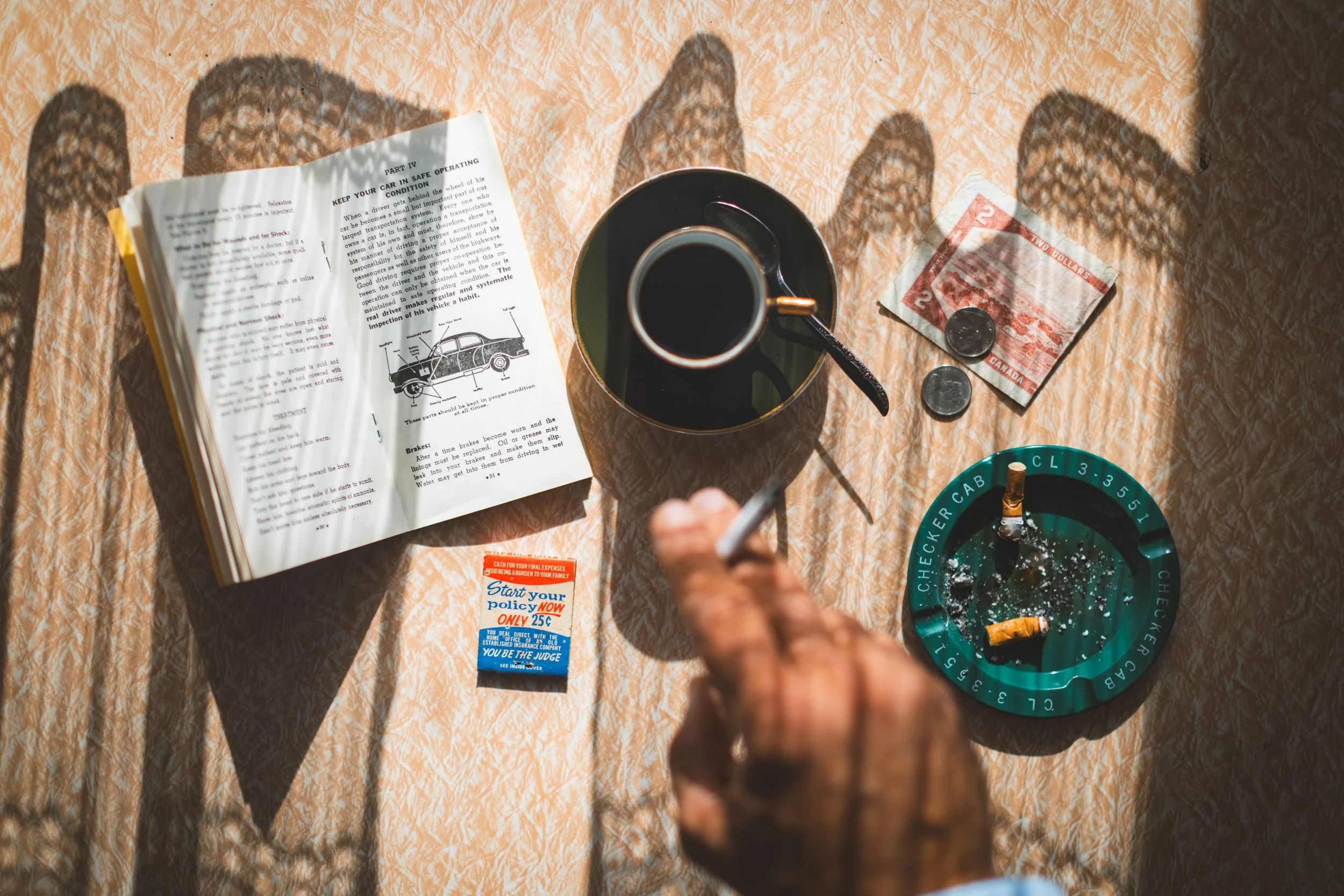
The Checker Cab ashtray dates back to the mid-century (specifically between 1945-1960 due to the alphanumeric format of the phone # CL 3-3551. This system was introduced following WWII and was phased out in 1960). However, the company doesn’t refer to the infamous Checker Taxi synonymous with New York City streets and instead is from a Windsor based company that continues to operate as the Canadian Checker Cab.
The Canadian two-dollar bill was printed in 1954 as part of the Canadian Landscape Series and features a portrait of a young Queen Elizabeth II on the front, and the landscape of the Saint-Francois River Valley in Upper Melbourne, Richmond, Quebec. Two more versions of the $2 paper bill were printed before being replaced by the toonie coin in 1996.
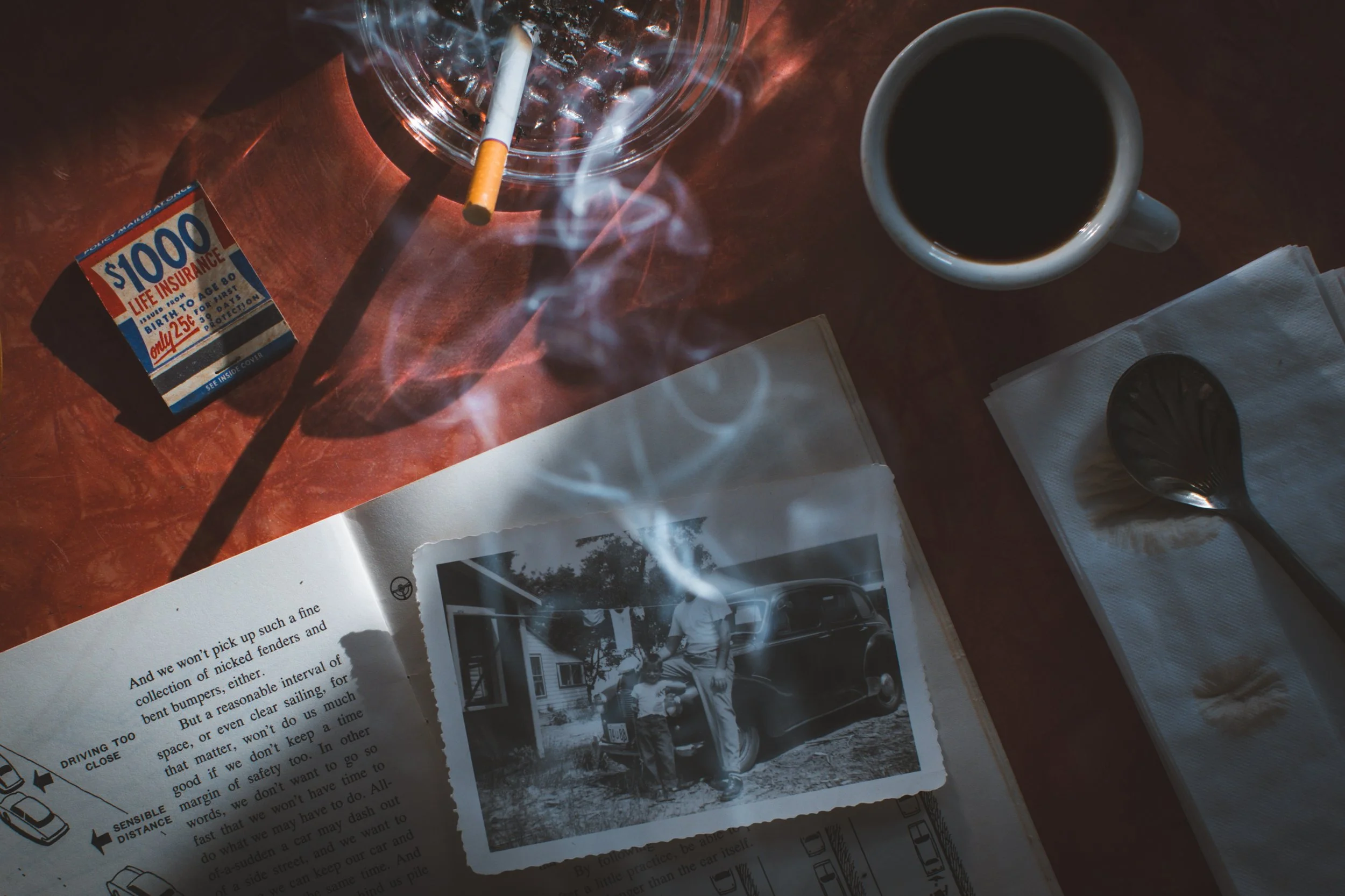
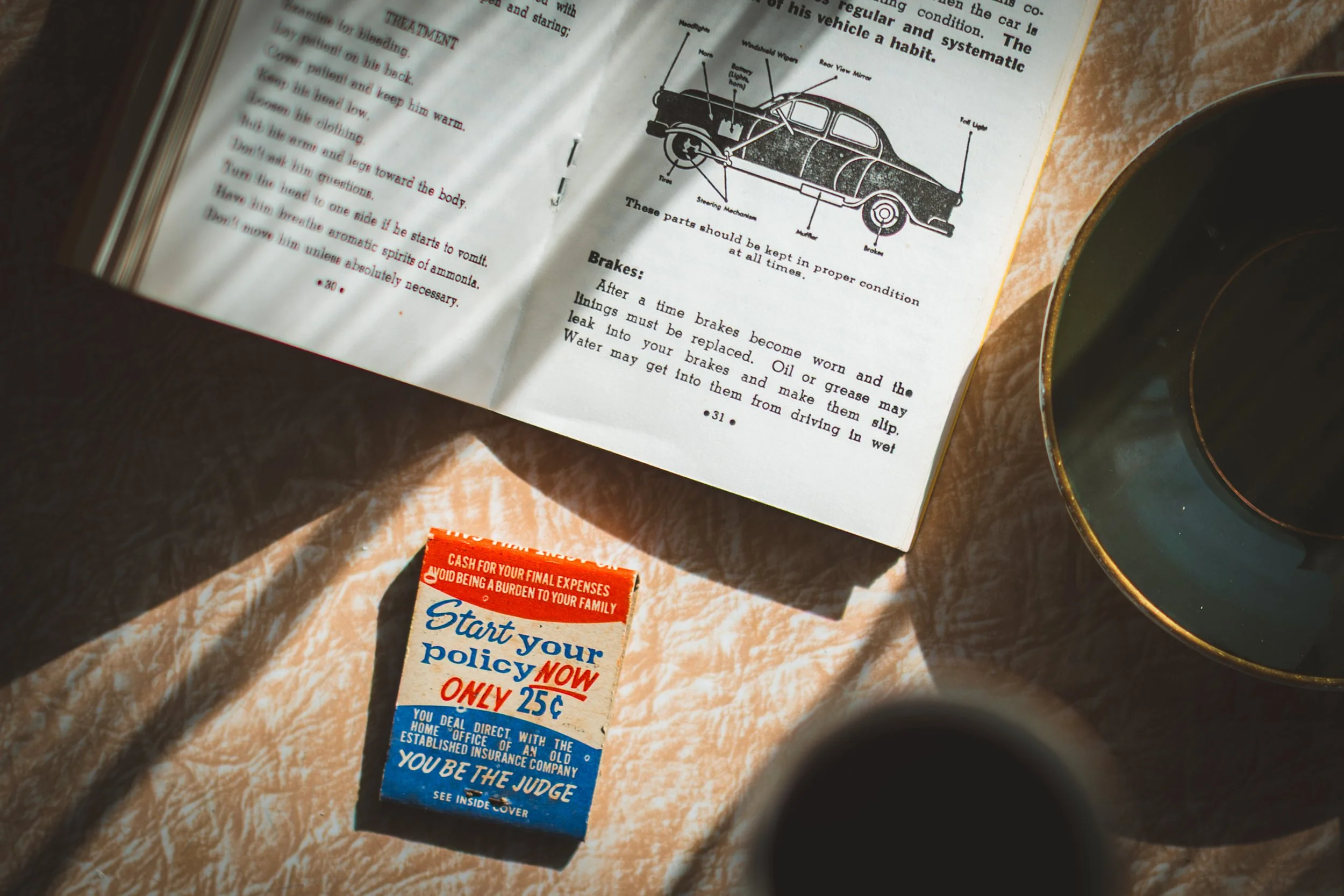
This mid-century life insurance matchbook ad by the American Life and Accident Insurance Company offers a $1000 life insurance policy for just a quarter for the first 30 days. Just a quarter?! And if the economic hook isn’t working, they target your internalized guilt and self esteem by warning you to ‘avoid being a burden to your family’. No one wants that. But after the paperwork is complete and the 30 days expire your new rate begins. And perhaps it wasn’t the sweet sounding deal you were expecting, but you’ve done all the paper work, and to undo it all is just too much of a bother. Sound familiar? Who has ever signed up for a free trial of a phone app, only to have your credit card billed for weeks and months after your trial ended?
The raspberry doughnuts are from Blak’s Bakery on Langlois Avenue.
Next, we will examine the health hazards associated with smoking.